US Ground Forces deployed to the Middle East
2026-03-31
As of 31st March
TL;DR
Two Marine Expeditionary Units (MEUs) and elements of the U.S. Army's 82nd Airborne Division have been deployed to the U.S. Central Command (CENTCOM) area of responsibility in support of Operation Epic Fury, the ongoing U.S.-Israeli military campaign against Iran that began on February 28, 2026. Together, these three formations represent the largest deployment of ground-capable forces to the Middle East since the Iraq War, adding approximately 4,700 Marines, 2,000 paratroopers, and 4,000+ sailors to the theater — a combined ~10,000 personnel on top of the 50,000 U.S. troops already stationed in the region. Their convergence marks a significant expansion of U.S. military options, from amphibious assault and airborne forced entry to targeted raids and island seizure operations.
UNIT 1: 31st Marine Expeditionary Unit (31st MEU)
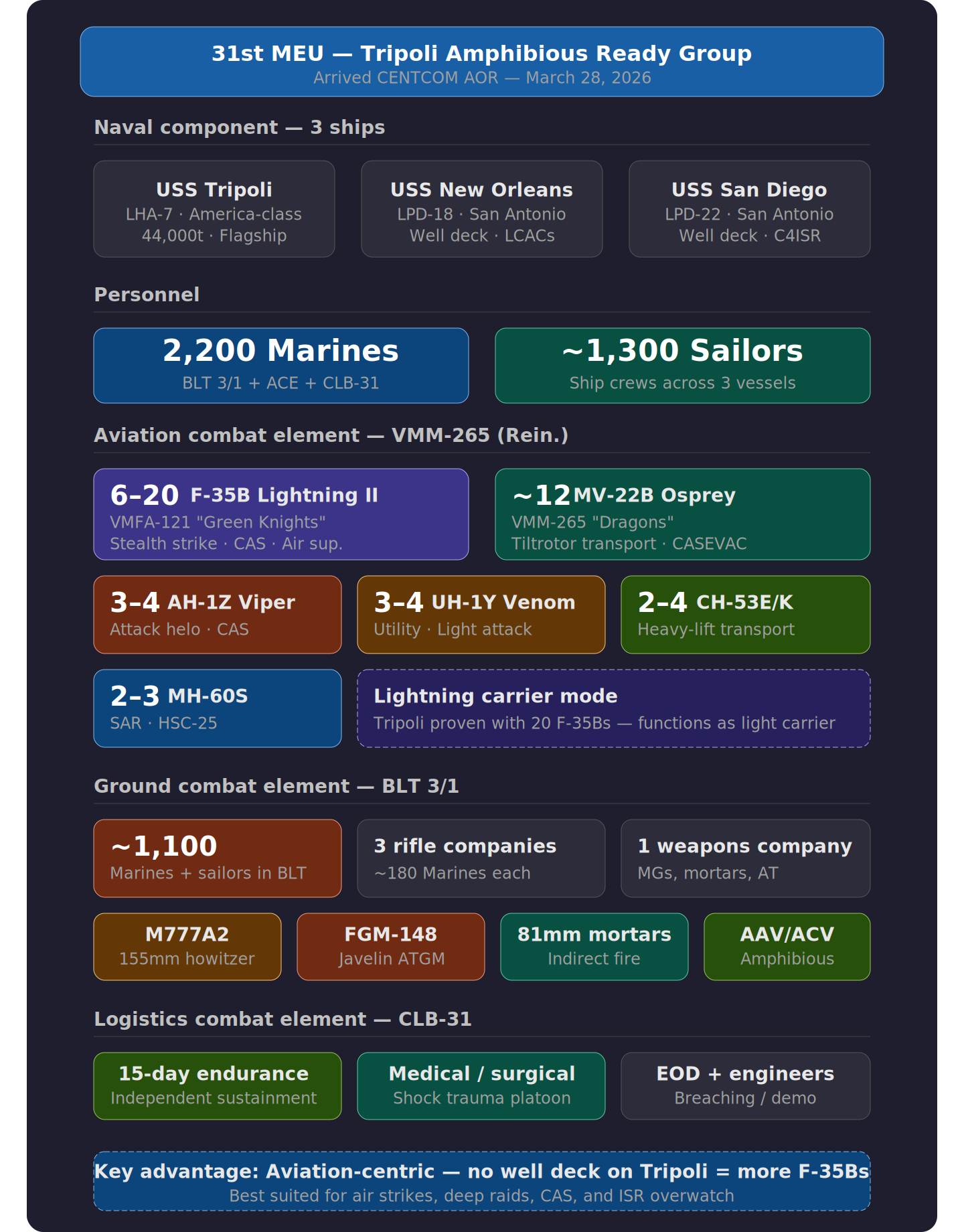
Overview & Identity
The 31st MEU is the only permanently forward-deployed MEU in the United States Marine Corps. Headquartered at Camp Hansen, Marine Corps Base Camp Smedley D. Butler, Okinawa, Japan, it serves as the premier crisis response force for the Indo-Pacific region. The unit was originally commissioned on March 1, 1967, as Special Landing Force Alpha for operations in Vietnam. It earned a Presidential Unit Citation during intense combat operations in Vietnam's Tet counteroffensive. The unit has deployed to every major U.S. conflict in the region since, including Operation Desert Fox (1998–99), the Iraq War (2004–05, including the Second Battle of Fallujah), and now Operation Epic Fury.
- Current Status: Arrived in CENTCOM waters on March 28, 2026. Operational.
Tripoli Amphibious Ready Group (Tripoli ARG) — Naval Components
| Ship | Hull | Class | Role |
|---|---|---|---|
| USS Tripoli | LHA-7 | America-class | Flagship / Amphibious Assault Ship |
| USS New Orleans | LPD-18 | San Antonio-class | Amphibious Transport Dock |
| USS San Diego | LPD-22 | San Antonio-class | Amphibious Transport Dock |
USS Tripoli (LHA-7) — Key Platform
.jpg)
USS Tripoli is the second ship in the America-class of amphibious assault ships and one of the most capable aviation-centric amphibious platforms in the world.
- Displacement: ~44,000+ tons (full load)
- Length: 844 feet (257 meters)
- Flight Deck: ~9 acres
- Crew: ~1,100 sailors + embarked Marines
- Design Feature: No well deck — the space was reallocated to an enlarged hangar deck, expanded aviation maintenance facilities, increased aviation fuel storage, and larger weapons magazines
- "Lightning Carrier" Capability: In April 2022, Tripoli demonstrated the ability to operate 20 F-35B Lightning II fighters simultaneously, effectively functioning as a small aircraft carrier. This makes it uniquely capable of both amphibious support and independent offensive air operations.
- Homeport: Sasebo, Japan (forward-deployed since June 2025, replacing USS America)
USS New Orleans (LPD-18)
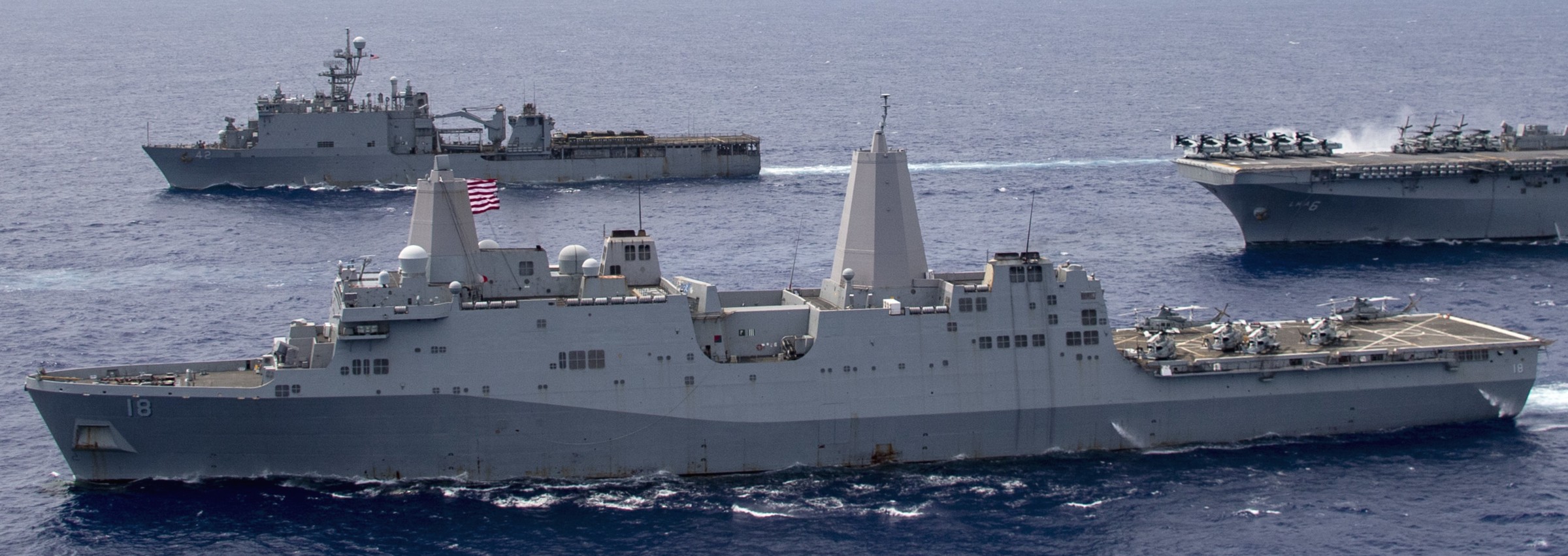
San Antonio-class amphibious transport dock. Carries Marines, vehicles, and cargo. Features a well deck for launching landing craft (LCACs and LCUs) and a flight deck for helicopter/tiltrotor operations.
USS San Diego (LPD-22)
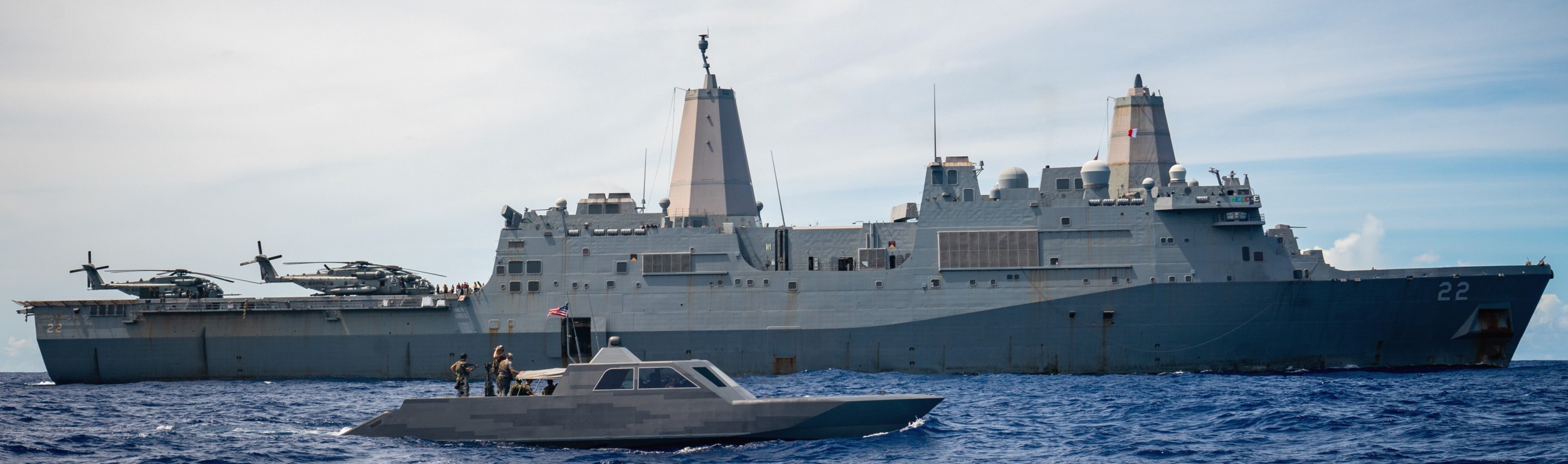
San Antonio-class amphibious transport dock. Same capabilities as New Orleans. Integrates advanced C4ISR (Command, Control, Communications, Computers, Intelligence, Surveillance, and Reconnaissance) systems for coordinating distributed landing forces.
31st MEU — Organizational Structure & Assets
Total Personnel: ~2,200 Marines + ~1,300 sailors across the ARG (~3,500 total)
1. Command Element (CE)
- Company-sized headquarters element
- Provides command and control (C2) for the entire MEU
- Intelligence, communications, and planning staff
- Liaison teams for joint/combined operations
2. Ground Combat Element (GCE) — Battalion Landing Team (BLT 3/1)
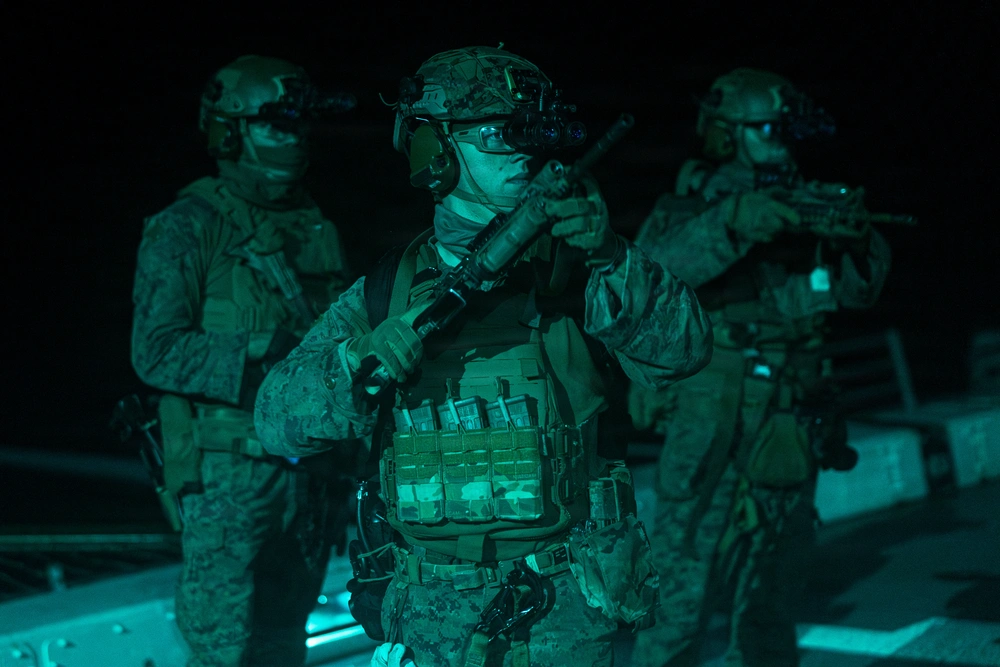
Built around 3rd Battalion, 1st Marine Regiment (BLT 3/1), reinforced with additional combat and combat support attachments.
Core Infantry:
- 3 Rifle Companies (~180 Marines each)
- 1 Weapons Company (heavy machine guns, mortars, anti-tank weapons)
- ~1,100 Marines and sailors total in the BLT
Attached/Organic Assets:
- 81mm Mortar Platoon — organic indirect fire support
- Anti-Armor (Javelin/TOW) Section — FGM-148 Javelin anti-tank guided missiles
- Artillery Battery (typically a battery from 12th Marines) — M777A2 155mm towed howitzers (or equivalent)
- Amphibious Assault Vehicles (AAVs) / Amphibious Combat Vehicles (ACVs) — armored troop carriers for ship-to-shore movement
- Reconnaissance Platoon — force reconnaissance and surveillance
- Combat Engineer Platoon — breaching, demolition, obstacle reduction
- Light Armored Reconnaissance (LAR) Detachment — LAV-25 vehicles (if attached)
3. Aviation Combat Element (ACE) — VMM-265 (Reinforced) "Dragons"
The ACE is built around Marine Medium Tiltrotor Squadron 265 (VMM-265), reinforced with detachments from multiple aviation squadrons.
| Aircraft Type | Designation | Quantity (est.) | Role |
|---|---|---|---|
| F-35B Lightning II | VMFA-121 "Green Knights" | 6–10 (up to 20 in lightning carrier config) | Stealth strike fighter / Close Air Support / Air superiority |
| MV-22B Osprey | VMM-265 "Dragons" | 12 | Tiltrotor transport / Assault support / CASEVAC |
| AH-1Z Viper | HMLA det. | 3–4 | Attack helicopter / Close Air Support |
| UH-1Y Venom | HMLA det. | 3–4 | Utility / Light attack / C2 |
| CH-53E/K Super/King Stallion | HMH det. | 2–4 | Heavy-lift transport |
| MH-60S Seahawk | HSC-25 "Island Knights" | 2–3 | Search & rescue / Utility / Vertical replenishment |
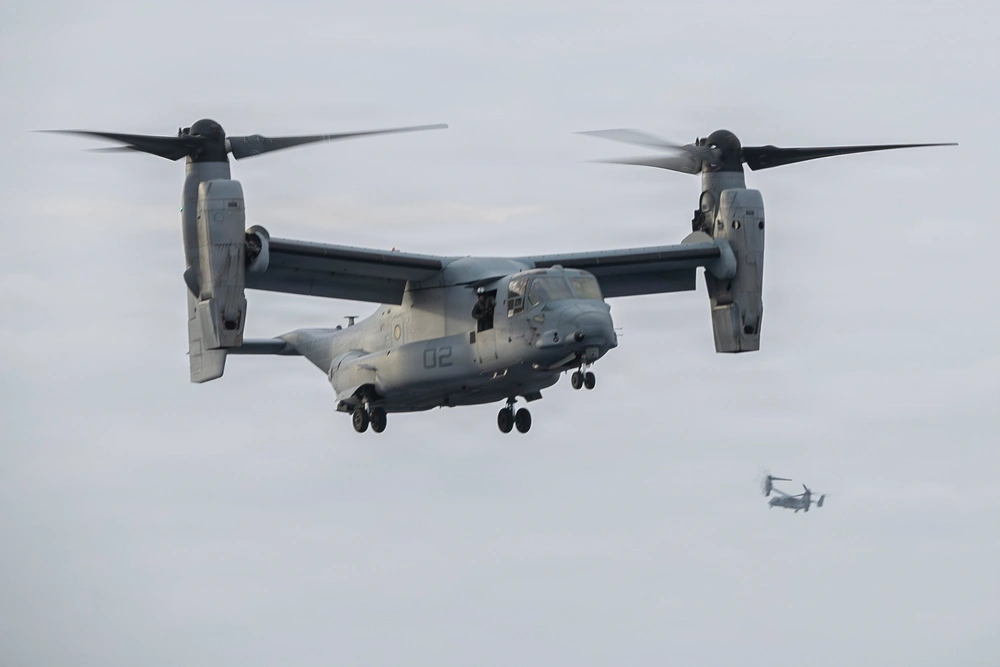
F-35B Lightning II — Key Capability:
- 5th-generation stealth fighter with short takeoff and vertical landing (STOVL)
- Sensor fusion: AN/APG-81 AESA radar, Distributed Aperture System (DAS), Electro-Optical Targeting System (EOTS)
- Can carry AIM-120 AMRAAM, AIM-9X, GBU-31/32 JDAM, GBU-12 Paveway II, AGM-154 JSOW
- Combat radius: ~450 nautical miles
- Tripoli's unique "lightning carrier" configuration can surge up to 20 F-35Bs, giving it strike capability comparable to a light aircraft carrier
4. Logistics Combat Element (LCE) — Combat Logistics Battalion 31 (CLB-31)
- Designed to sustain the MEU independently in austere environments for up to 15 days
- Medical/surgical teams (including a shock trauma platoon)
- Motor transport and maintenance sections
- Supply, fuel, water purification
- Explosive ordnance disposal (EOD) detachment
- Expeditionary communications company
- Combat engineer support
31st MEU — Combat History Relevant to Current Operations
- Operation Desert Fox (1998–99): Deployed to the Persian Gulf off Kuwait
- Iraq War (2004–05): Major role in the Second Battle of Fallujah (Operation Phantom Fury), one of the bloodiest urban battles of the Iraq War
- East Timor, Philippines, humanitarian operations: Extensive experience across the Indo-Pacific
Transit & Deployment Timeline
| Date | Event |
|---|---|
| Feb 2026 | Achieved full MEU certification |
| March 6–7 | Completed Iron Fist 26 bilateral exercise with Japan |
| ~March 11 | Departed Sasebo, Japan |
| ~March 15 | Transiting South China Sea at high speed |
| ~March 17 | Approached Strait of Malacca |
| ~March 20 | South of Sri Lanka |
| ~March 22–23 | Entered Arabian Sea |
| March 26 | Diego Garcia port call |
| March 28 | Arrived in CENTCOM AOR |
UNIT 2: 11th Marine Expeditionary Unit (11th MEU) — "Pride of the Pacific"
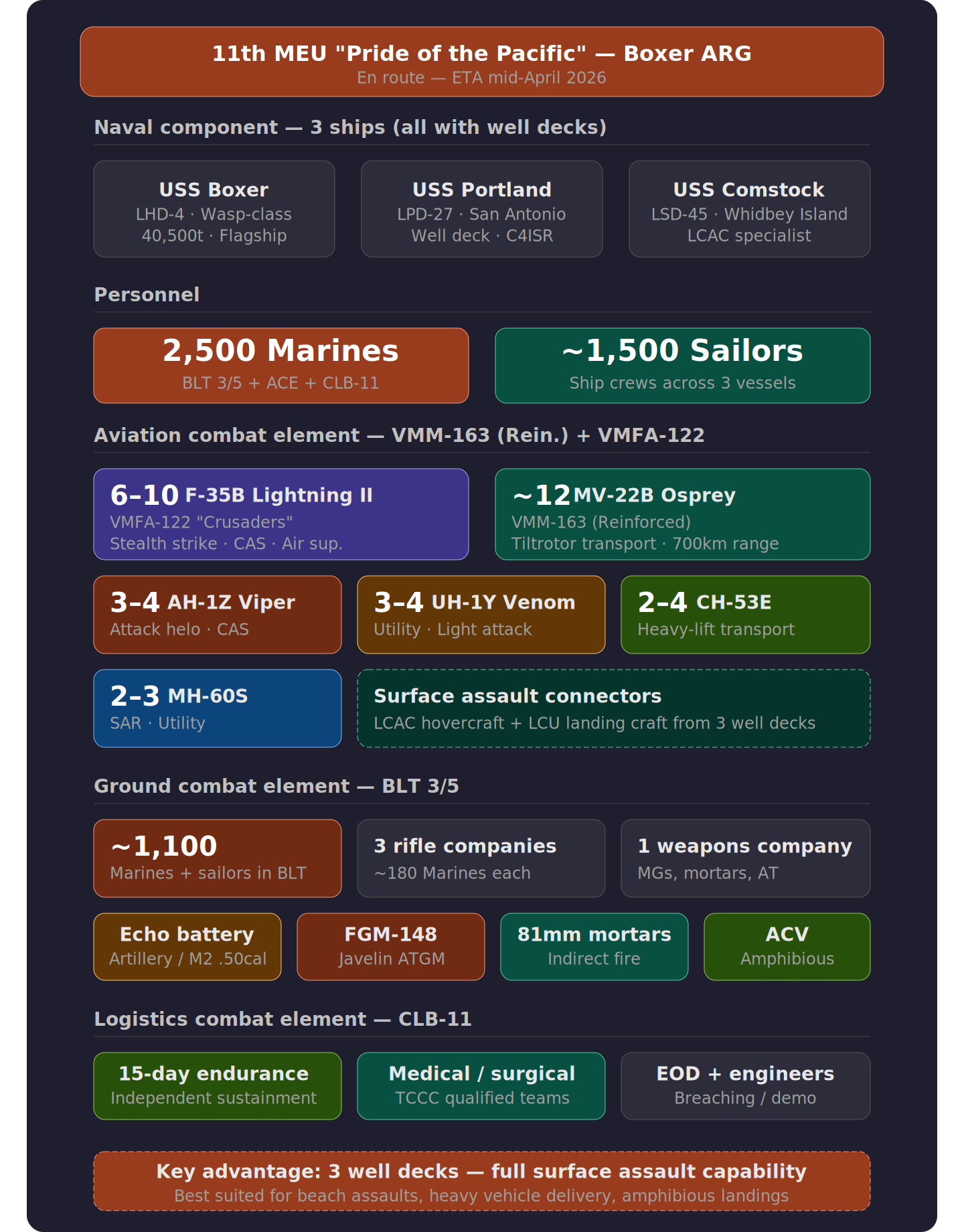
Overview & Identity
The 11th MEU, originally designated the 17th Marine Amphibious Unit, was formed at Camp Pendleton, California, on April 13, 1979. It is one of the most combat-experienced MEUs in the Marine Corps, with extensive deployments to the Persian Gulf dating back to Operations Desert Shield/Desert Storm.
- Nickname: "Pride of the Pacific"
- Homebase: Camp Del Mar, Marine Corps Base Camp Pendleton, California
- Current Status: En route to CENTCOM, operating in the Pacific as of late March 2026. Estimated arrival: ~mid-April 2026.
Boxer Amphibious Ready Group (Boxer ARG) — Naval Components
| Ship | Hull | Class | Role |
|---|---|---|---|
| USS Boxer | LHD-4 | Wasp-class | Flagship / Amphibious Assault Ship |
| USS Portland | LPD-27 | San Antonio-class | Amphibious Transport Dock |
| USS Comstock | LSD-45 | Whidbey Island-class | Dock Landing Ship |
USS Boxer (LHD-4)
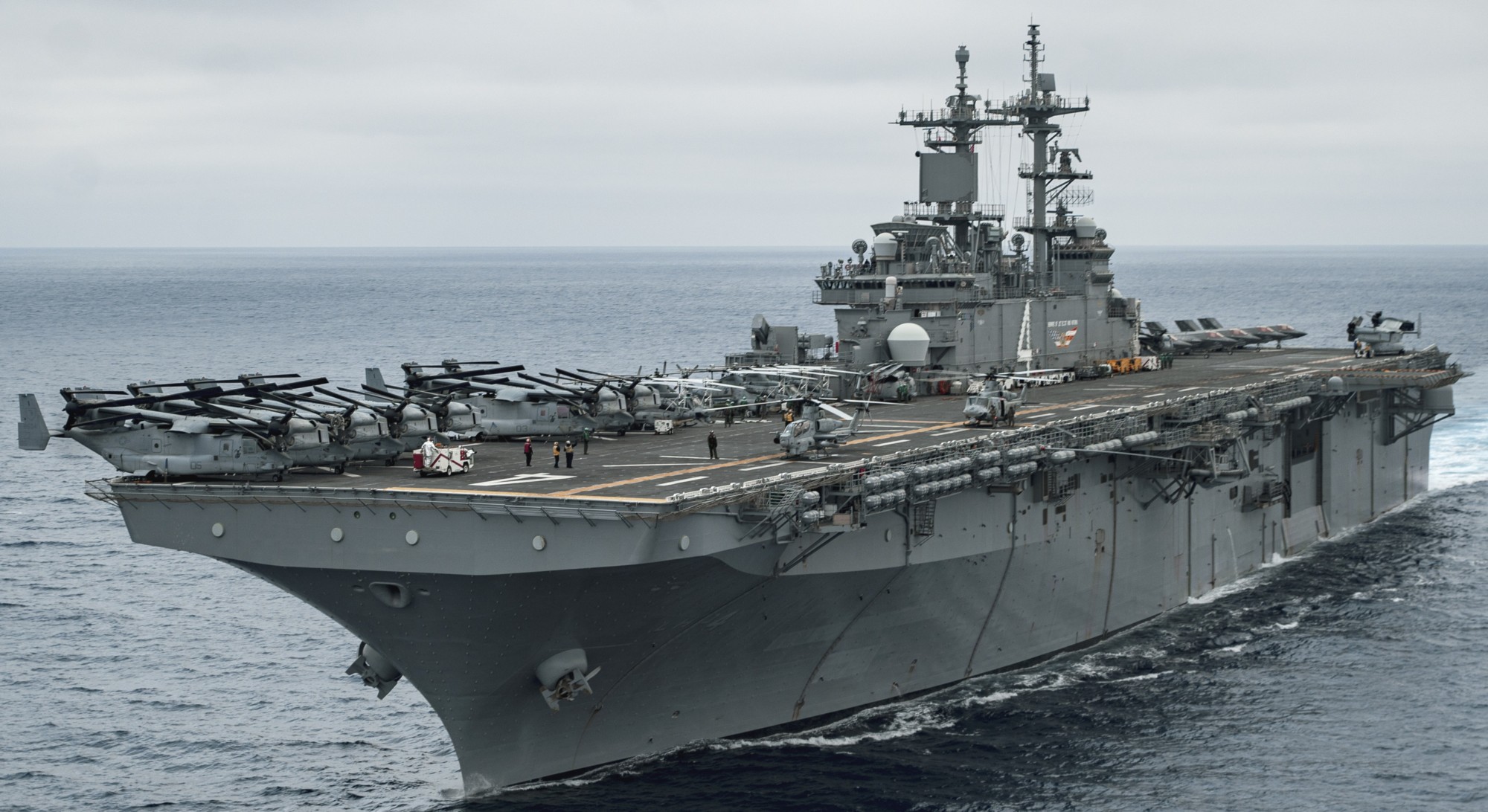
- Displacement: ~40,500 tons (full load)
- Length: ~253 meters
- Key Difference from Tripoli: Boxer retains a well deck, enabling deployment of Landing Craft Air Cushion (LCAC) hovercraft and Landing Craft Utility (LCU) vessels — critical for beach assault and heavy equipment delivery
- Aviation: Can operate F-35B Lightning II fighters, MV-22B Ospreys, and a full rotary-wing complement
- Homeport: Naval Base San Diego, California
USS Portland (LPD-27)
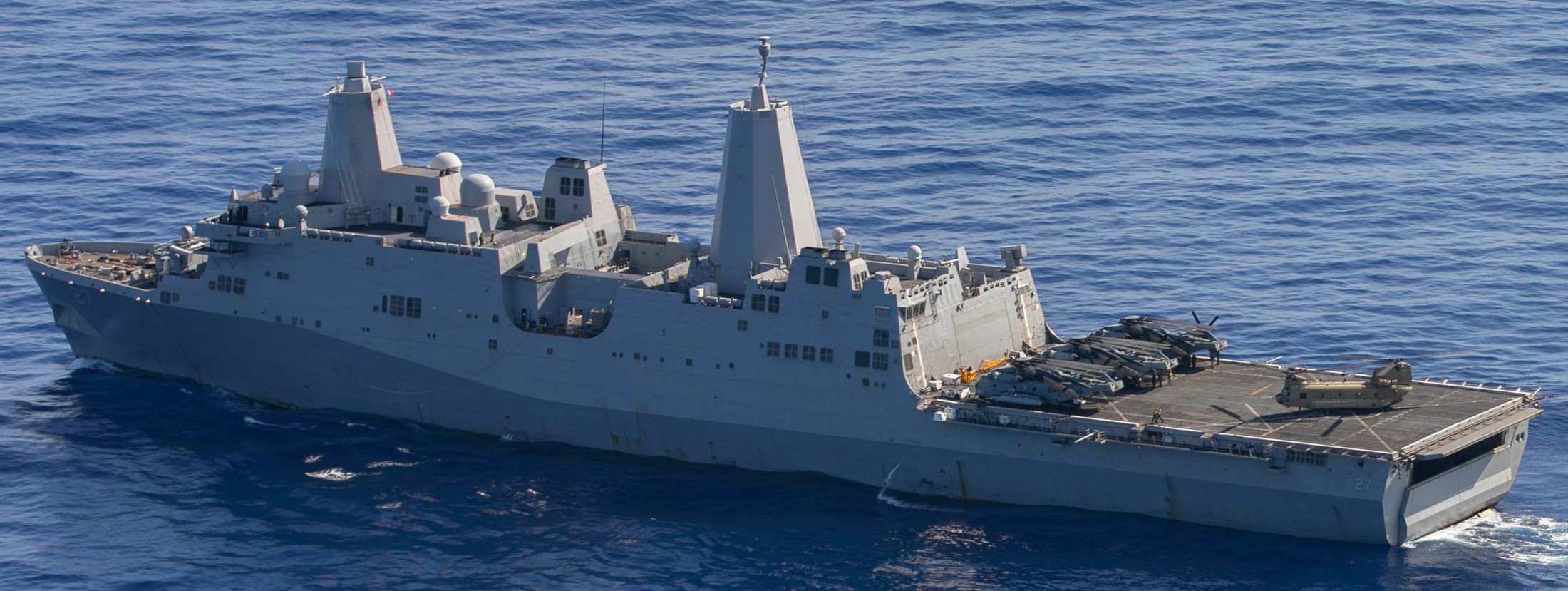
San Antonio-class amphibious transport dock with advanced C4ISR systems. Capable of launching LCACs from well deck and conducting helicopter/tiltrotor operations from flight deck.
USS Comstock (LSD-45)
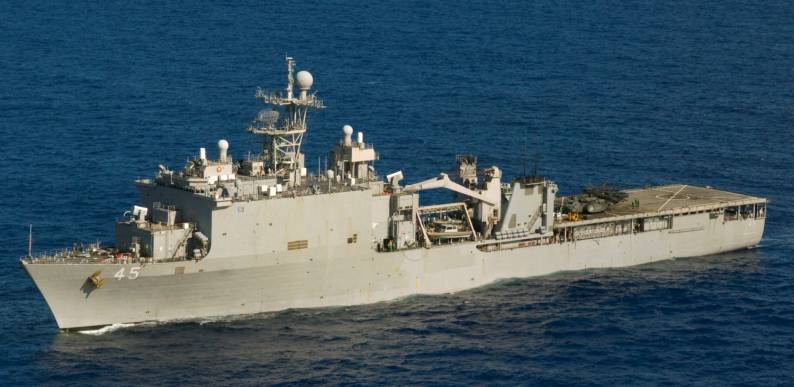
Whidbey Island-class dock landing ship. Specializes in deploying landing craft air cushion (LCAC) hovercraft and mechanized units. Provides the logistical backbone for sustained amphibious maneuver.
Critical Advantage of Boxer ARG over Tripoli ARG: The Boxer ARG has three ships with well decks (Boxer, Portland, Comstock), giving it significantly greater capacity for surface assault connectors (LCACs, LCUs) and heavy vehicle delivery to shore. This makes it the more capable formation for a traditional amphibious beach assault.
11th MEU — Organizational Structure & Assets
Total Personnel: ~2,500 Marines + ~1,500 sailors across the ARG (~4,000 total)
1. Command Element (CE)
- MEU headquarters with full planning and intelligence capability
- Joint fires coordination center
- Information operations and civil affairs teams
2. Ground Combat Element (GCE) — Battalion Landing Team 3/5 (BLT 3/5)
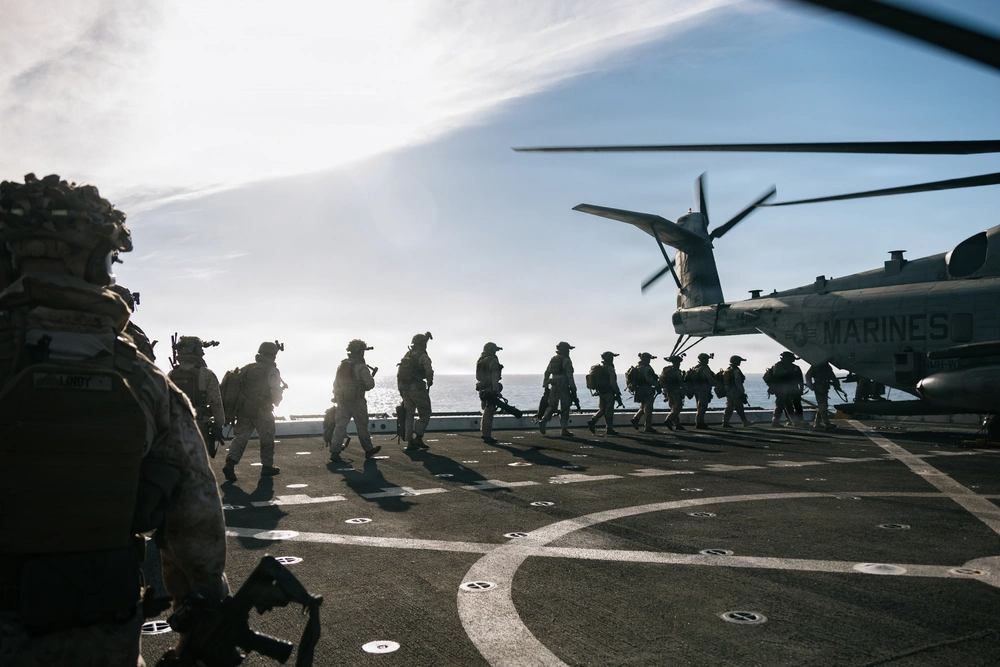
Built around 3rd Battalion, 5th Marine Regiment (BLT 3/5), one of the Marine Corps' most storied infantry battalions.
Core Infantry:
- 3 Rifle Companies
- 1 Weapons Company
- ~1,100 Marines and sailors
Attached/Organic Assets:
- Echo Battery (artillery) — cannoneers confirmed training aboard Portland with M2 .50 caliber machine guns and other crew-served weapons
- 81mm Mortar Platoon
- Anti-Armor Section — FGM-148 Javelin missiles
- Amphibious Combat Vehicles (ACVs) — confirmed operating from Boxer's well deck during pre-deployment exercises
- Reconnaissance Platoon
- Combat Engineer Platoon
- M240B Machine Gun Teams — confirmed training aboard Boxer
- TCCC (Tactical Combat Casualty Care) qualified teams — confirmed training aboard Comstock
3. Aviation Combat Element (ACE) — VMM-163 (Reinforced) + VMFA-122
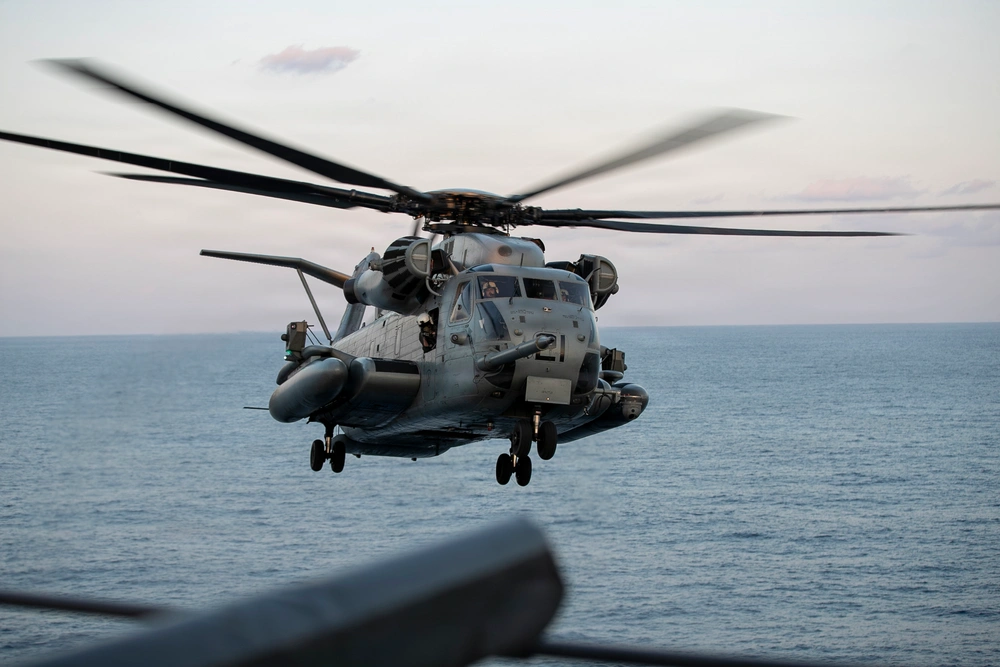
The 11th MEU's ACE is notably robust, built around two named squadrons:
| Aircraft Type | Designation | Quantity (est.) | Role |
|---|---|---|---|
| F-35B Lightning II | VMFA-122 "Crusaders" | 6–10 | Stealth strike fighter / CAS / Air superiority |
| MV-22B Osprey | VMM-163 (Rein.) | 12 | Tiltrotor transport / Assault support |
| AH-1Z Viper | HMLA det. | 3–4 | Attack helicopter / CAS |
| UH-1Y Venom | HMLA det. | 3–4 | Utility / Light attack |
| CH-53E Super Stallion | HMH det. | 2–4 | Heavy-lift transport |
| MH-60S Seahawk | HSC det. | 2–3 | SAR / Utility |
4. Logistics Combat Element (LCE) — Combat Logistics Battalion 11 (CLB-11)
- Same capability profile as CLB-31
- 15-day independent sustainment
- Medical, maintenance, supply, communications, EOD
- Combat engineer support
11th MEU — Combat History Relevant to Current Operations
- Operations Desert Shield/Desert Storm (1991): Formed the main portion of the reconstituted 5th Marine Expeditionary Brigade. Integral to the amphibious deception plan that fixed multiple Iraqi divisions on the Kuwaiti coast. Later landed at Al Mishab and Al Jubayl as 1st MEF reserve.
- Battle of Najaf (2004): Led a combined assault against the Mahdi Army of Muqtada al-Sadr in Najaf, Iraq, one of the major urban engagements of the Iraq War. Remained in the province until February 2005 overseeing reconstruction.
- 1995 Iraq: Participated in the exfiltration of General Hussein Kamel Hassan al-Majid and his brother from Iraq.
Transit & Deployment Timeline
| Date | Event |
|---|---|
| Jan 21 – Feb 6, 2026 | Completed integrated training exercise off California |
| ~Feb–March 2026 | Final certification and compressed leave |
| March 18 | USS Boxer departed San Diego (~3 weeks ahead of schedule) |
| March 19–20 | USS Portland and USS Comstock departed |
| Late March 2026 | Operating in U.S. 3rd Fleet / Pacific area |
| ~Mid-April 2026 (est.) | Expected arrival in CENTCOM AOR |
UNIT 3: 82nd Airborne Division — Immediate Response Force (IRF)
Overview & Identity
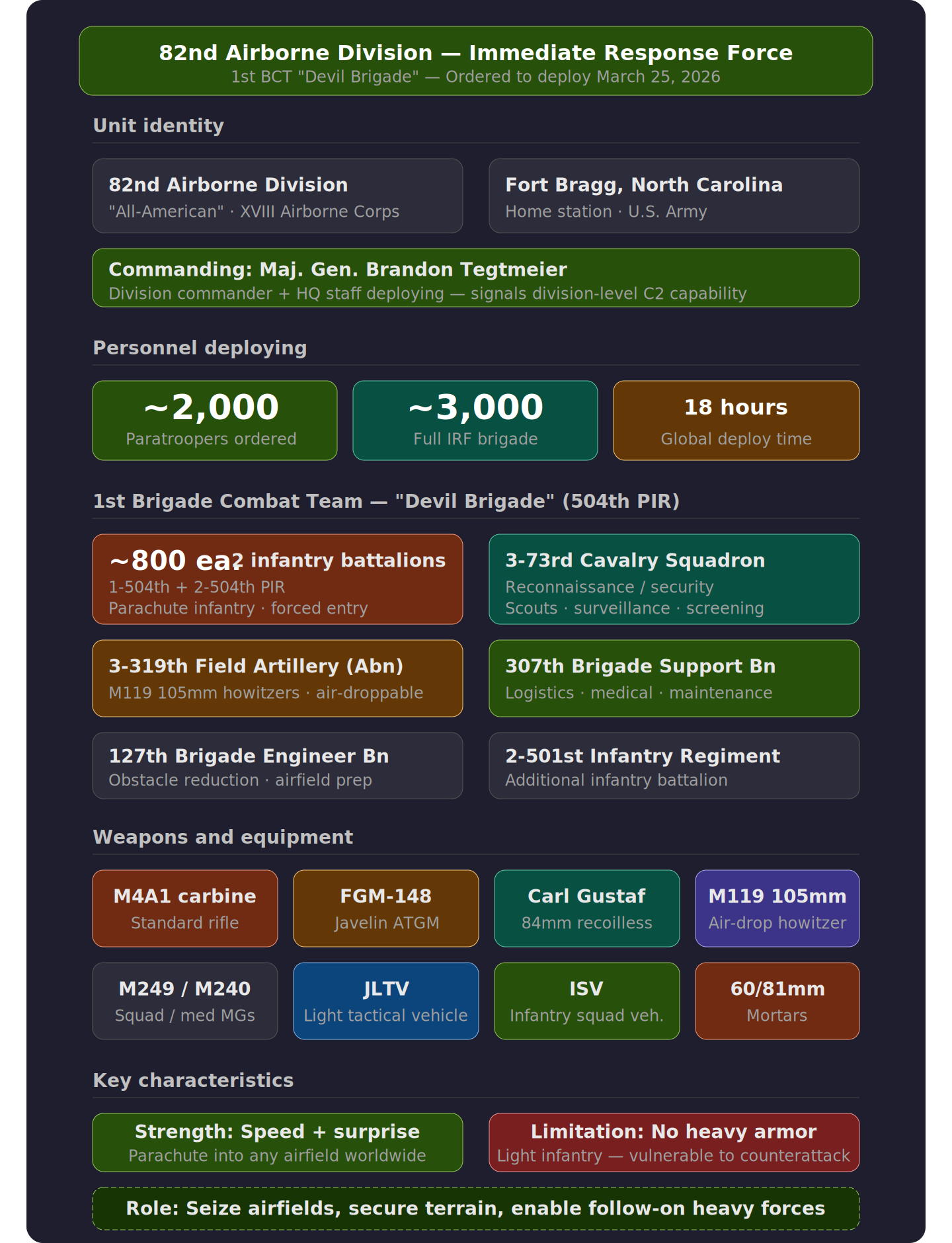
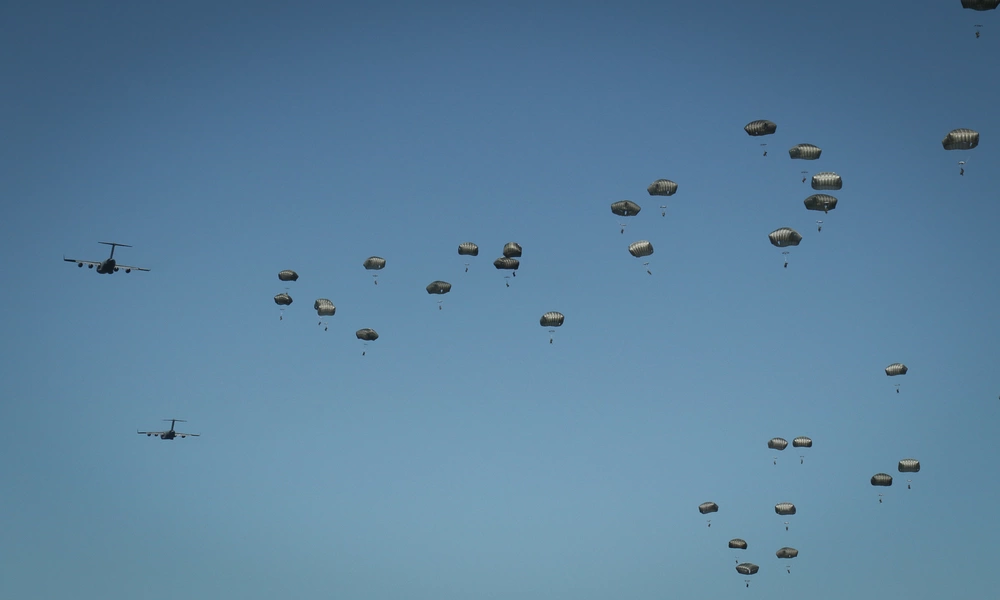
The 82nd Airborne Division, known as the "All-American" division, is the U.S. Army's premier rapid-deployment force and primary forced-entry unit. Headquartered at Fort Bragg, North Carolina, under the XVIII Airborne Corps, the division maintains a brigade-sized Immediate Response Force (IRF) capable of deploying anywhere in the world within 18 hours of notification. It is among the most storied units in U.S. military history, with combat jumps dating back to Normandy and the Netherlands in World War II.
- Nickname: "All-American" (AA patch)
- Homebase: Fort Bragg, North Carolina
- Current Status: Written orders to deploy issued March 25, 2026. Initial elements deploying within days.
Commanding Officer
Maj. Gen. Brandon Tegtmeier, the 82nd Airborne Division commander, is deploying personally to the Middle East along with his division staff. The presence of a two-star general and a division-level headquarters element is significant — it signals the establishment of a division-level command and control node in-theater, capable of coordinating multiple brigades and integrating joint fires (air, naval, and ground artillery). This is a step above what the MEUs bring, which operate at the MEU (colonel-level) command level.
Force Deploying: 1st Brigade Combat Team — "Devil Brigade"
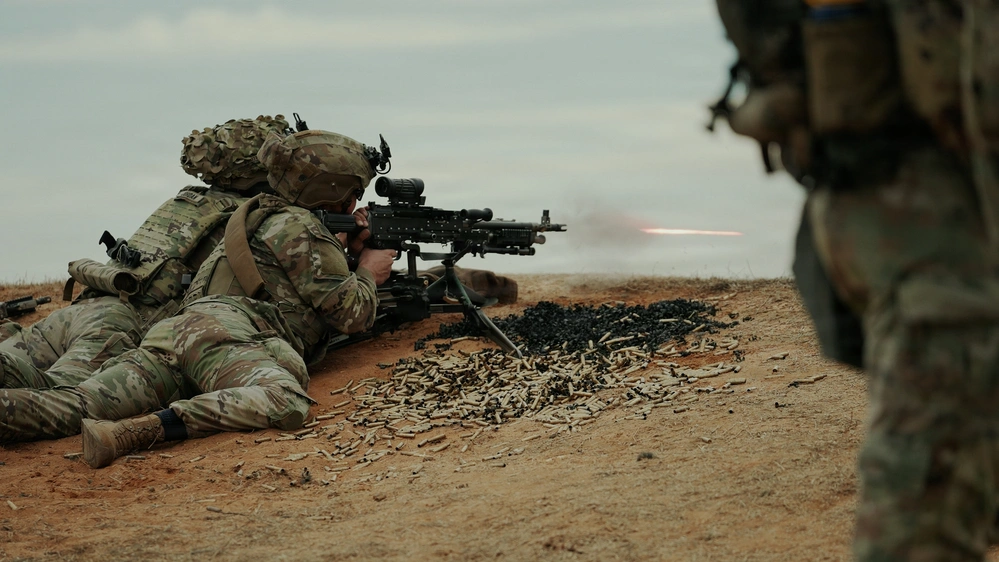
The deploying force is drawn from the 1st Brigade Combat Team (1st BCT), 82nd Airborne Division, nicknamed the "Devil Brigade." The 1st BCT is the current holder of the IRF designation and is the nucleus of the Army's emergency response capability.
Total Personnel Deploying: ~2,000 paratroopers initially ordered, with the full IRF brigade of ~3,000 soldiers available for follow-on deployment.
Organizational Composition
Headquarters & Division Staff
- Division HQ element under Maj. Gen. Tegtmeier
- Division-level C2, intelligence, fires coordination
- Enablers: ISR, electronic warfare, cyber, counter-UAS
Infantry Battalions (2 deploying)
| Battalion | Regiment | Strength (est.) | Role |
|---|---|---|---|
| 1st Battalion, 504th PIR | 504th Parachute Infantry | ~800 | Parachute infantry / forced entry |
| 2nd Battalion, 504th PIR | 504th Parachute Infantry | ~800 | Parachute infantry / forced entry |
The 504th Parachute Infantry Regiment ("Devils in Baggy Pants") traces its lineage to World War II combat jumps into Sicily, Salerno, Anzio, and Nijmegen (Operation Market Garden). It is among the most decorated infantry regiments in the U.S. Army.
Additional Organic Units:
| Unit | Role |
|---|---|
| 3rd Squadron, 73rd Cavalry Regiment | Reconnaissance / surveillance / screening |
| 2nd Battalion, 501st Infantry Regiment | Additional infantry battalion |
| 3-319th Field Artillery Regiment (Airborne) | M119 105mm howitzers — air-droppable |
| 307th Brigade Support Battalion | Logistics, medical, maintenance |
| 127th Brigade Engineer Battalion | Obstacle reduction, airfield preparation, survivability |
Weapons & Equipment
The 82nd Airborne is a light infantry force — it deploys without heavy armor (no tanks, no Bradley IFVs) in the initial phase. Its combat power is built around speed, surprise, and concentrated light infantry firepower.
Individual & Crew-Served Weapons:
- M4A1 carbines (standard rifle)
- M249 SAW (squad automatic weapon, 5.56mm)
- M240B/L medium machine guns (7.62mm)
- Precision sniper systems (M110 SASS, M2010)
- M2 .50 caliber heavy machine guns
Anti-Armor:
- FGM-148 Javelin anti-tank guided missiles
- M3E1 Carl Gustaf 84mm recoilless rifle (multi-purpose — anti-armor, anti-structure, anti-personnel)
Indirect Fire:
- 60mm and 81mm mortars (company and battalion level)
- M119 105mm towed howitzers (3-319th FA) — the M119 is specifically designed to be air-droppable by parachute, giving the 82nd organic artillery support within hours of insertion
Vehicles (limited, air-transportable):
- Joint Light Tactical Vehicle (JLTV) — armored light tactical truck, designed for rapid air deployment
- Infantry Squad Vehicle (ISV) — lightweight, 9-person off-road vehicle based on the Chevrolet Colorado ZR2 platform, designed for C-130 and CH-47 transport
- No tanks, no IFVs, no heavy armored vehicles in initial deployment
Air Defense / Counter-UAS:
- Short-range air defense (SHORAD) elements
- Counter-UAS systems — critical given Iran's extensive drone capabilities
How the 82nd Airborne Deploys
Unlike the MEUs, which arrive by sea over weeks, the 82nd can deploy in hours:
- Alert notification — The IRF maintains bags packed and equipment staged at all times. Soldiers can be recalled and at the airfield within hours.
- Air movement — Paratroopers and equipment load onto C-17 Globemaster III and C-130J Super Hercules transport aircraft at Pope Field (adjacent to Fort Bragg).
- Forced entry — The 82nd can parachute directly into a contested airfield (combat jump) or conduct an airland operation into a secured strip.
- Seizure — Once on the ground, paratroopers seize the airfield and surrounding terrain, establishing a lodgment.
- Follow-on forces — The secured airfield then becomes a gateway for heavier follow-on forces (armor, additional infantry, logistics) to flow in via airlift.
Combat History Relevant to Current Operations
- Operation Desert Shield/Desert Storm (1990–91): Deployed to Saudi Arabia as a deterrent force; 2nd Brigade secured Saudi Aramco oil facilities near Abqaiq. During the ground war, 1st Brigade advanced alongside French Division Daguet.
- Operation Enduring Freedom (2001–02): Deployed to Afghanistan for combat operations.
- Operation Iraqi Freedom (2003–08): Multiple rotations; 1st BCT deployed in 2007–2008. The 173rd Airborne (sister unit) conducted the famous combat jump into northern Iraq.
- Soleimani Response (January 2020): The 82nd's IRF (1st BCT) deployed to the Middle East within hours after the U.S. killing of IRGC commander Qasem Soleimani — the last time this exact unit made an emergency deployment to the region in response to an Iran crisis.
Key Strengths & Limitations for Iran Operations
Strengths:
- Unmatched speed of deployment — can be in-theater within 18–48 hours vs. weeks for the MEUs
- Forced-entry capability — can parachute into an airfield without needing a port or beach
- Division-level C2 — Tegtmeier's HQ can coordinate the MEUs, 82nd elements, and JSOC under a unified ground command
- Psychological deterrent — the arrival of the "All-Americans" signals a serious escalation in ground capability
Limitations:
- No heavy armor — light infantry is vulnerable to armored counterattack
- Limited organic air support — depends on Air Force/Navy for CAS, unlike MEUs which bring their own F-35Bs and Vipers
- Sustainment — requires continuous airlift for resupply, making it dependent on secured airfields
- Cannot conduct amphibious assault — must rely on MEUs for ship-to-shore operations
How 82nd Integrates with the MEUs
The three formations are complementary:
| Formation | Arrives By | Strength | Specialty |
|---|---|---|---|
| 31st MEU / Tripoli ARG | Sea (arrived Mar 28) | ~3,500 | Air-centric strikes, F-35B overwatch, deep raids |
| 11th MEU / Boxer ARG | Sea (~mid-April) | ~4,000 | Amphibious beach assault, armored vehicle delivery |
| 82nd Airborne IRF | Air (days after order) | ~2,000–3,000 | Airfield seizure, rapid reinforcement, forced entry |
In a Kharg Island scenario, the most likely integration would be: MEU Marines conduct the amphibious assault from the sea while 82nd paratroopers simultaneously seize any airstrip on or near the island by air, creating a lodgment for follow-on forces and logistics. The 82nd's division HQ would then coordinate the combined ground force.
Combined Force Comparison
| Attribute | 31st MEU / Tripoli ARG | 11th MEU / Boxer ARG |
|---|---|---|
| Personnel | ~3,500 (2,200 Marines + 1,300 sailors) | ~4,000 (2,500 Marines + 1,500 sailors) |
| Flagship | USS Tripoli (LHA-7) — America-class | USS Boxer (LHD-4) — Wasp-class |
| F-35B Squadron | VMFA-121 "Green Knights" | VMFA-122 "Crusaders" |
| Tiltrotor Squadron | VMM-265 "Dragons" | VMM-163 (Reinforced) |
| BLT | BLT 3/1 | BLT 3/5 |
| CLB | CLB-31 | CLB-11 |
| Well Deck | None (Tripoli optimized for aviation) | Yes (all three ships have well decks) |
| LCAC Hovercraft | Limited (via escort LPDs) | Full capability (3 ships with well decks) |
| Lightning Carrier Mode | Yes — proven with 20 F-35Bs | Limited — Boxer flight deck smaller |
| Best Suited For | Air-centric strikes, deep raids, CAS | Traditional amphibious assault, vehicle-heavy ops |
| Status | In theater (March 28) | En route (~mid-April arrival) |
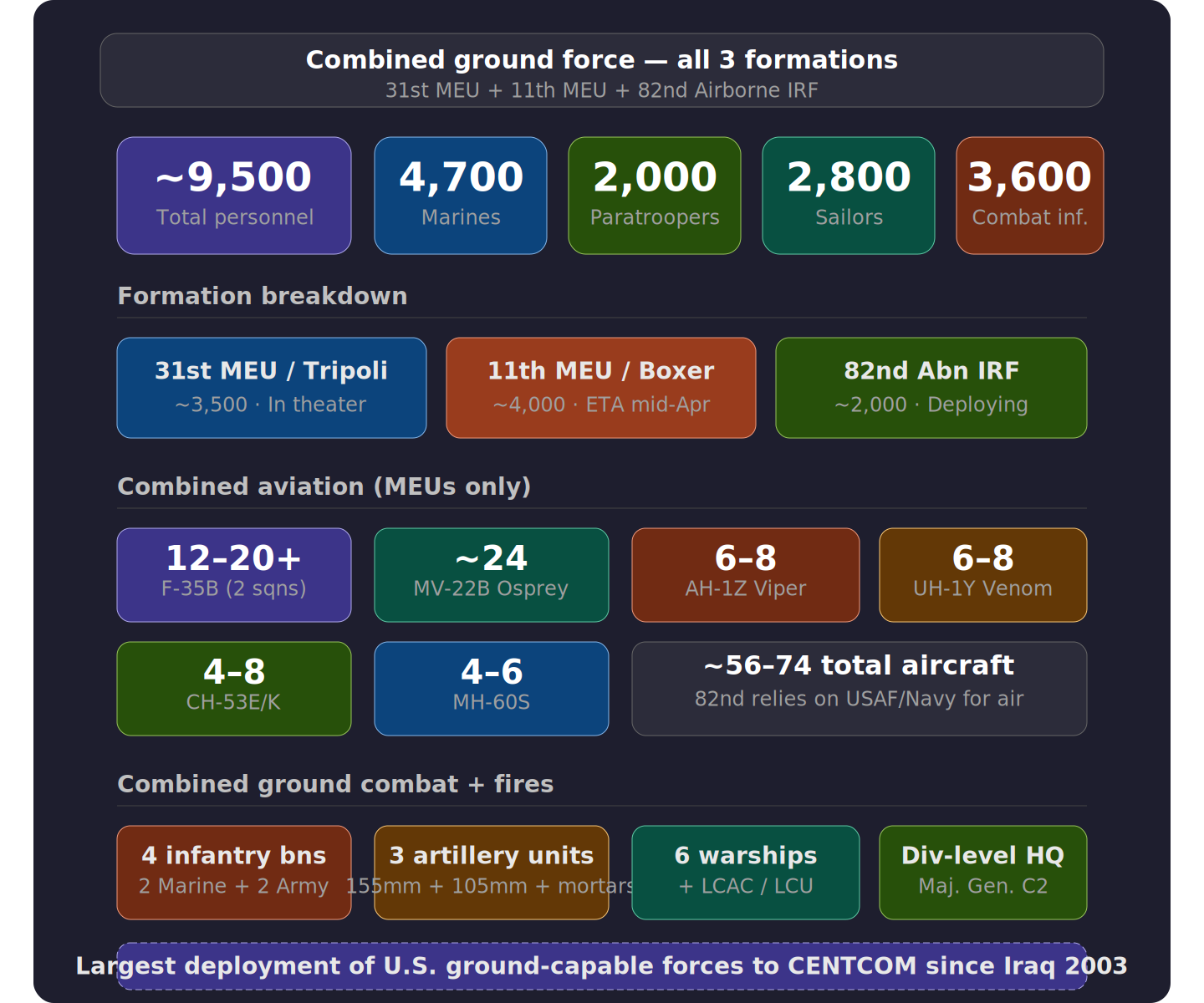
Combined Totals (All Three Formations):
- ~4,700 Marines + ~2,800 sailors + ~2,000 paratroopers = ~9,500 personnel
- 6 amphibious warships
- 12–20+ F-35B stealth fighters (2 squadrons)
- ~24 MV-22B Ospreys (2 squadrons)
- 6–8 AH-1Z Viper attack helicopters
- 6–8 UH-1Y Venom utility/attack helicopters
- 4–8 CH-53E/K heavy-lift helicopters
- 4–6 MH-60S Seahawks
- Multiple LCAC hovercraft and LCU landing craft
- Amphibious Combat Vehicles (ACVs) and AAVs
- Artillery: M777A2 155mm howitzers (MEUs) + M119 105mm howitzers (82nd), 60/81mm mortars
- Anti-armor: FGM-148 Javelin + M3E1 Carl Gustaf across all formations
- Total combat infantry: ~3,600 (2 Marine BLTs + 2 Army paratrooper battalions) — the core ground combat force
Potential Mission Sets Within the Iran Theater
Based on Pentagon planning documents, expert analysis, and reporting as of late March 2026, the following are the primary mission sets these forces (both MEUs and the 82nd Airborne) could be tasked with:
Mission 1: Seizure of Kharg Island
Priority Level: HIGH — This is the most widely reported and discussed potential mission.
Strategic Rationale: Kharg Island handles approximately 90% of Iran's crude oil exports. Capturing it would give the U.S. enormous economic leverage over Tehran, potentially coercing Iran to reopen the Strait of Hormuz. Storage capacity on Kharg is estimated at ~30 million barrels, with ~18 million barrels currently stored.
Operational Concept:
- The Tripoli ARG and Boxer ARG would transit northward through the Strait of Hormuz and deep into the Persian Gulf (~350+ miles past the Strait)
- F-35Bs from both MEUs would establish air superiority over the island and suppress remaining Iranian air defenses
- AH-1Z Vipers and UH-1Y Venoms would provide close air support during the assault
- Marines from BLT 3/1 and/or BLT 3/5 would conduct amphibious assault via ACVs from Boxer ARG well decks, with helicopter-borne vertical envelopment from Ospreys
- Combat engineers would clear mines (Iran has reportedly laid anti-personnel and anti-armor mines on the shoreline)
- CLBs would establish logistics nodes for sustainment
Challenges & Risks:
- Kharg is ~20 miles off the Iranian coast — within range of Iranian rocket artillery, drones, and remaining cruise/ballistic missiles
- Iran has reportedly moved MANPADs (shoulder-fired SAMs) and additional troops to the island
- Anti-personnel and anti-armor mines have been laid on likely landing beaches
- Naval transit through the Strait of Hormuz exposes ARG ships to Iranian anti-ship missiles, mines (~5,000 estimated in Iranian inventory), and fast attack craft
- Iran has publicly warned it will bomb its own territory to kill any American soldiers on its soil
- Sustainment would require continuous seaborne logistics through hostile waters
- Estimated timeline: "Weeks, not months" per Pentagon officials; alternative estimate of "a couple of months"
Force Suitability: Both MEUs combined (~3,600 combat infantry between the two BLTs) plus the 82nd Airborne (~1,600 combat infantry from two paratrooper battalions) provide approximately 5,200 ground combat troops. The Boxer ARG's well-deck capability is critical for delivering armored vehicles and heavy equipment to the beach. The 82nd could simultaneously seize any airstrip on or adjacent to Kharg by parachute or airland operation, establishing an air logistics hub for sustainment. Maj. Gen. Tegtmeier's division HQ would provide unified ground command.
Mission 2: Raids on Iranian Hormuz Littoral
Priority Level: HIGH — Likely to precede or run in parallel with any Kharg operation.
Strategic Rationale: Iran's ability to threaten shipping in the Strait of Hormuz derives from a network of coastal anti-ship missile batteries, fast attack craft bases, mine stockpiles, and drone launch sites along its southern coastline. Many of these are hardened or concealed targets difficult to destroy from the air alone.
Operational Concept:
- Marines would conduct helicopter-borne commando raids from Ospreys and Vipers onto Iranian coastal positions near the Strait of Hormuz
- Targets: anti-ship missile launchers, mine storage facilities, fast attack craft pens, drone launch sites, radar stations
- Raids would be short-duration (hours, not days), with Marines extracting back to amphibious ships
- F-35Bs provide close air support and precision strike; AH-1Zs provide direct fire support
- Reconnaissance teams would insert ahead of raids to identify targets
Challenges & Risks:
- Iranian coastal defense forces are well-positioned and fortified
- Risk of significant casualties from Iranian fire during insertion/extraction
- Iran's network of islands and peninsulas near the Strait provides layered defensive positions
- Iranian fast attack craft and mini-submarines operate in these waters
Force Suitability: Ideal mission for MEUs — this is exactly the type of rapid-response, ship-to-shore raid capability that MEUs are designed and trained for.
Mission 3: Seizure of Smaller Islands Near the Strait of Hormuz
Priority Level: MEDIUM-HIGH
Strategic Rationale: Iran controls several small islands in and around the Strait of Hormuz (Abu Musa, Greater and Lesser Tunbs) that could serve as platforms for harassing shipping. Seizing these would help secure the waterway.
Operational Concept:
- Similar to Kharg but smaller in scale
- Helicopter assault with ACV/LCAC surface assault
- Establish forward operating bases for sustained presence
- Enable naval escort operations through the Strait
Challenges & Risks:
- Smaller scale but still within range of Iranian mainland
- Political complications (some islands are disputed between Iran and UAE)
- Sustainment challenges for island garrisons
Mission 4: Nuclear Material Retrieval / Securing Damaged Nuclear Facilities
Priority Level: MEDIUM — Discussed but most complex scenario
Strategic Rationale: U.S. Secretary of State Marco Rubio has publicly stated the U.S. may need to physically secure nuclear material inside Iran. Iran is estimated to possess ~440kg of highly enriched uranium, believed to be buried at facilities in Isfahan and elsewhere, many of which were damaged during strikes in Operation Epic Fury and last year's "Operation Midnight Hammer."
Operational Concept:
- Special operations forces (SOF) would likely lead, with MEU Marines providing outer security and rapid reaction force
- MV-22B Ospreys would provide deep insertion capability (~700km combat radius)
- CH-53K King Stallions for heavy equipment and extraction
- F-35Bs provide air superiority and ISR overhead
- This would be a joint operation with JSOC (Joint Special Operations Command)
Challenges & Risks:
- Deepest penetration into Iranian territory — highest risk
- Requires precise intelligence on nuclear material locations
- Extraction of radioactive material requires specialized CBRN (Chemical, Biological, Radiological, Nuclear) teams
- Highest potential for casualties and escalation
- Political implications of what would be perceived as a ground invasion
Mission 5: Freedom of Navigation / Maritime Security Operations
Priority Level: ONGOING
Strategic Rationale: Escort commercial shipping through the Strait of Hormuz to break Iran's naval blockade.
Operational Concept:
- MEU ships provide escort for oil tanker convoys
- F-35Bs and helicopters provide air cover
- Marines provide armed security teams aboard merchant vessels
- Mine countermeasures operations
Mission 6: Non-Combatant Evacuation Operations (NEO)
Priority Level: CONTINGENCY
Strategic Rationale: If the conflict escalates, U.S. embassies and citizens across the Gulf may need evacuation. MEUs are specifically trained and equipped for this mission.
Operational Concept:
- Ospreys and helicopters evacuate U.S. nationals from embassies
- Marines secure evacuation points
- Ships serve as temporary shelter and processing
Mission 7: Humanitarian Assistance / Disaster Relief (HA/DR)
Priority Level: CONTINGENCY
Strategic Rationale: Collateral damage from strikes or Iranian retaliation against Gulf states could create humanitarian crises requiring rapid response.
Force Protection Threats to MEU Operations
| Threat Category | Description | Severity |
|---|---|---|
| Anti-Ship Ballistic Missiles | Iran retains some ASBM capability despite degradation | HIGH |
| Anti-Ship Cruise Missiles | Coastal launchers and ship-mounted (including Noor/Qader) | HIGH |
| Naval Mines | ~5,000 mines in Iranian inventory — "catastrophic" if deployed | CRITICAL |
| Fast Attack Craft / Swarm Boats | IRGC Navy specialty — difficult to counter in narrow waters | HIGH |
| Coastal Defense Missiles | Land-based launchers covering Strait of Hormuz approaches | HIGH |
| Drones (one-way attack) | Shahed-series and other UAS; demonstrated in recent strikes | HIGH |
| MANPADs | Shoulder-fired SAMs; reported deployed to Kharg Island | MEDIUM |
| Land Mines | Anti-personnel and anti-armor mines; reported on Kharg beaches | MEDIUM |
| Rocket Artillery | Multiple Launch Rocket Systems; Kharg within range from mainland | MEDIUM-HIGH |
| Mini-Submarines | Ghadir/Nahang-class; capable of torpedo and mine operations | MEDIUM |
Context: Broader U.S. Force Posture in Theater
The two MEUs and 82nd Airborne IRF are part of a much larger force buildup:
- USS Abraham Lincoln CSG — Conducting 24/7 combat operations
- USS Gerald R. Ford CSG — Recently pulled into Split, Croatia for maintenance; expected to return
- USS George H.W. Bush CSG — Completed workups, deploying to join the fight
- Existing CENTCOM forces — ~50,000 troops already in the Middle East
- Casualties to date: 13 U.S. service members killed in action, ~290 wounded during Operation Epic Fury (as of late March 2026)
- Total with reinforcements: ~60,000+ troops in theater
Expert Assessment: Ruben Stewart of the IISS notes this force is far below what would be needed for a conventional invasion of Iran (the 2003 Iraq invasion required ~160,000 troops for a country one-quarter Iran's size). The deployed combat infantry — approximately 3,600 between the two MEU BLTs and two 82nd Airborne battalions — suggests limited, targeted operations (island seizure, coastal raids, nuclear material retrieval) rather than a broad ground campaign. As Alex Plitsas of the Atlantic Council noted: this force "is not sufficient for a major invasion nor to hold a single city. [It] says limited/targeted ops only."
Sources
- Military Times, USNI News, Naval News, DVIDS (official DoD imagery/releases)
- CNN, Wall Street Journal, Axios, Washington Post (Pentagon sourcing)
- Time Magazine, Al Jazeera, The National (UAE), Jerusalem Post
- Army Recognition, The War Zone, Stars & Stripes
- Foundation for Defense of Democracies (FDD), IISS analysis
- Wikipedia (unit histories, ship specifications)
Information based on open-source reporting and publicly available military data.